Audio Feast - Urushi treated capacitors

Urushi lacquer.
Interesting stuff. Caustic sap from a Japanese tree, you can look it up if you like. Interesting
is that many companies crafting audio devices are using it for finish. On cartridges (Koetsu,
Etsuro, Hana, and more), but as well on transformers and even on capacitors. The Audio Feast!.
All Japanese companies.. Urushi applying to objects is referred to as an art: many layers,
many different patterns.
Audio Feast
Audio Feast advertises on eBay with the Teramoto brand for capacitors and transformers made to order by
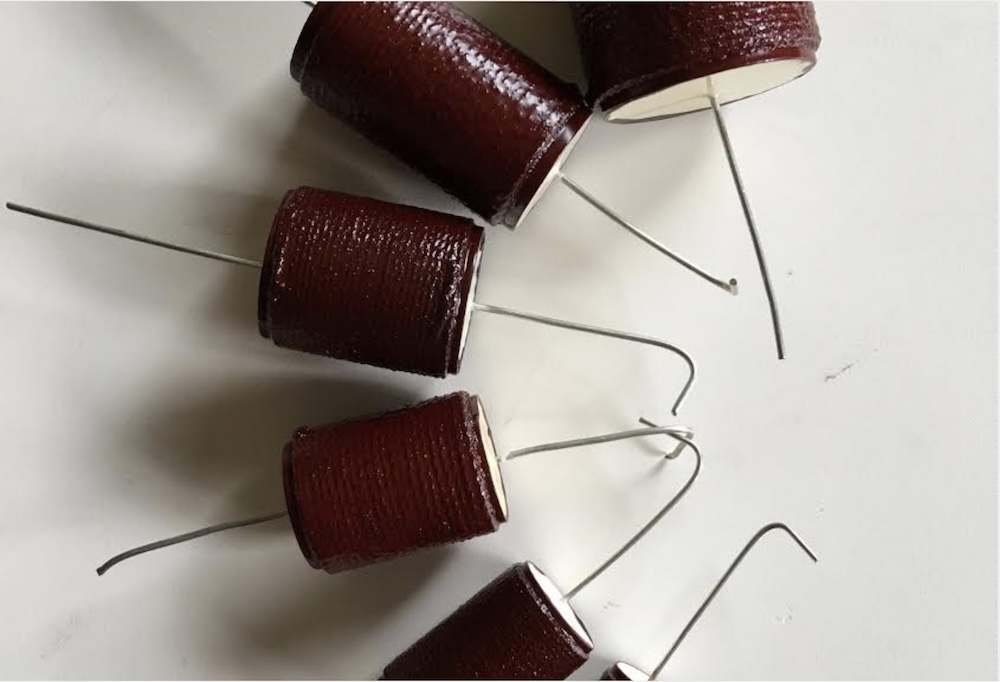
General Transformer in Saitama, Japan. The capacitors look intriguing, film capacitors wrapped in rope
(cotton?) which have been lacquered, or may I say painted, in deep red, sort of maroon. As I am
a sucker for these tweaks, I contacted Audio Feast and asked for more details. Soon some were shipped
and could be built in, listened to, compared to other coupling capacitors.
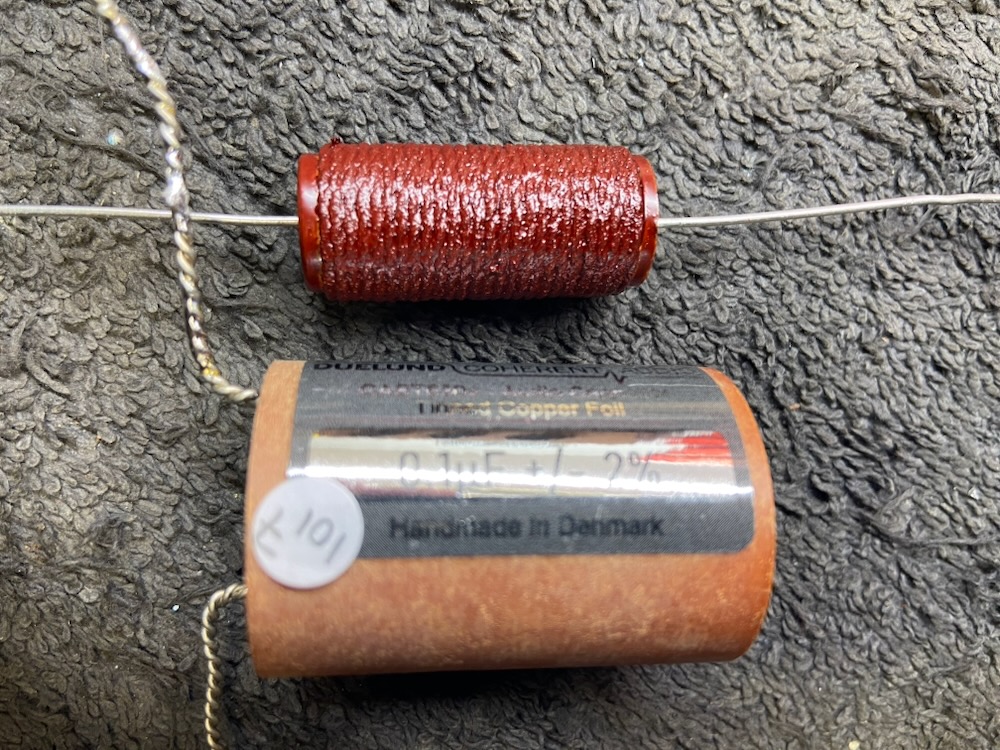
Same capacitance, Audio Feast Urushi and Duelund CU/SN Cast..
This was some time ago, April this year, and that has a story as well..
Sound differences..
The difference in sound between the Duelund and the Urushi was obvious. And where the Duelund
always had my favor this time the Urushi ringed my bell. The Duelund is damped, cast in some sort
stuff in a carton tube. It is almost immune for vibrations, thus reveals tiny signals that might
be influenced by vibrations? Don't know for sure, but it has to due with the damping. And then
the Urushi. It is applied to rope and has a harsh-ish feeling, not soft, like high-gloss paint. This,
of course, has a damping effect as well. The Urushi is a film capacitor, looks like MKP, with aluminum
foil? where the Duelund has tinned copper film. The Duelund is way heavier.. So the Urushi is
more susceptible for vibrations, probably. But the Urushi lacquer has a resonant as well, probably.
Anyway, the combination of the MKP and Urushi is magic. The tone and control of the tiniest signals
is remarkable. It is a big difference compared to the Duelund. And I switched back and forward in
the same phono amplifier. But more on the sonics of Urushi later..
Audio Feast has done some testing
on influence of vibrations on capacitors as well, to get an idea. Also Stephie Bench has done some
measurements of capacitors, and probably many more. So an influence on sound is not a bad thought..
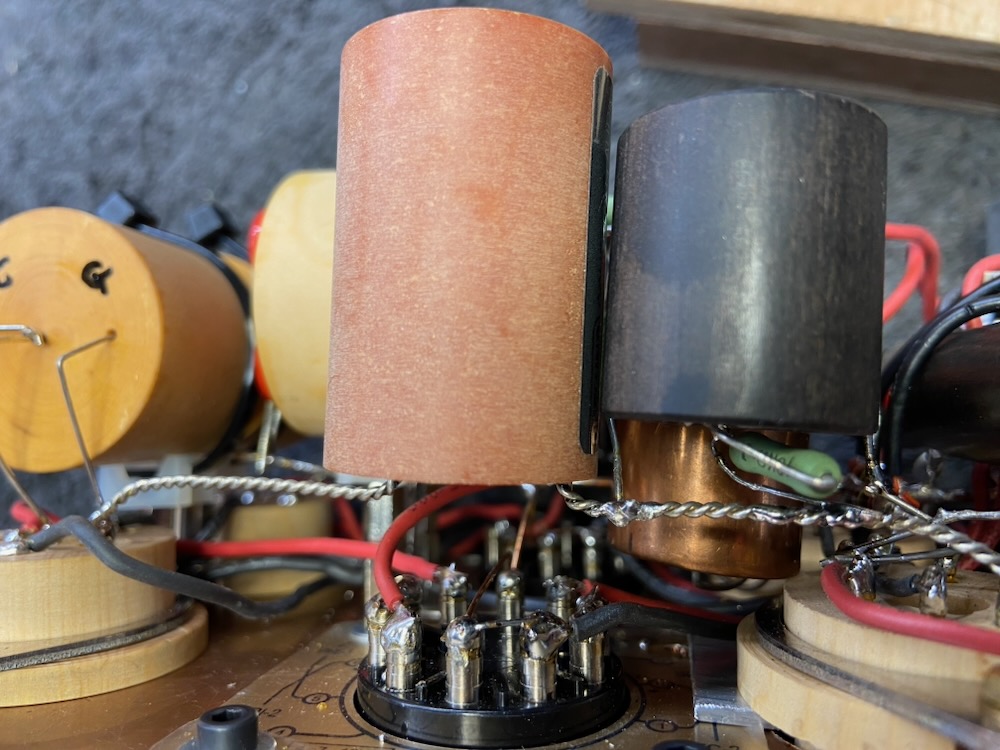
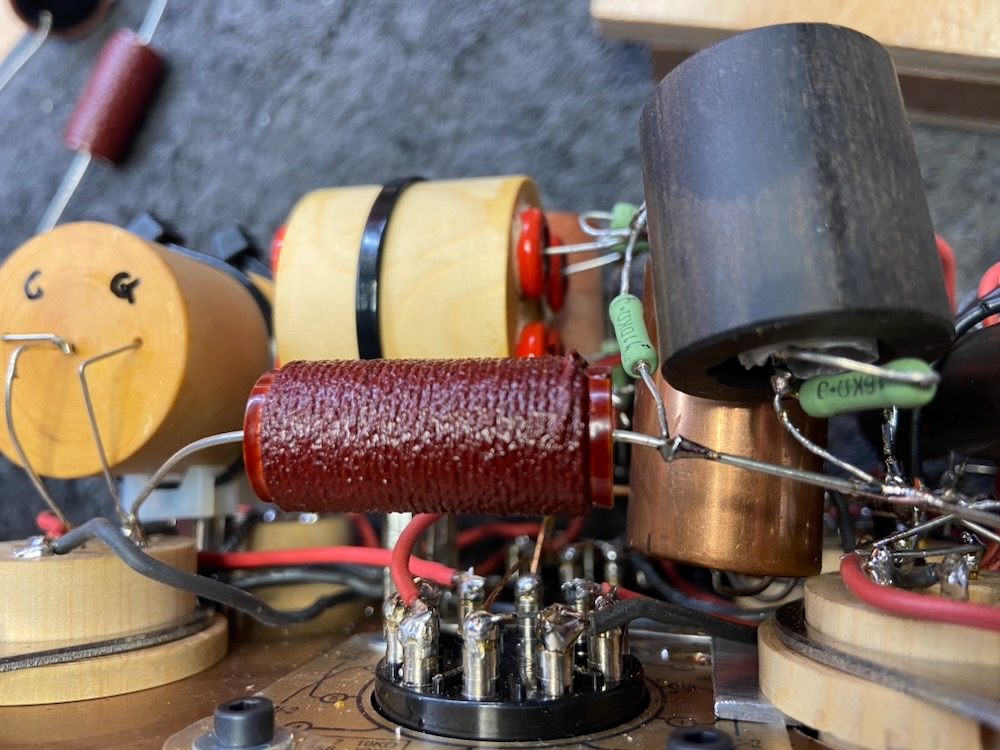
Replacing the Duelund capacitor..
A new project with Urushi capacitors
I contacted Kenji from Audio Feast again and ordered two pair of Urushi capacitors and a pair
of line-out transformers for another project. My idea was to build a new phono stage with these
coupling capacitors. And this is the story why it took so long.. The transformers are made to
order, around 4-8 weeks, and got shipped. But I missed the notification from customs, so the
package was sent back. No airmail but cheap seafreight. So it took around 5 weeks before it was
back at Audio Feast. They send it back again, and this time all went well and I got it within 2 weeks
after sending from Japan. Hence the long wait..
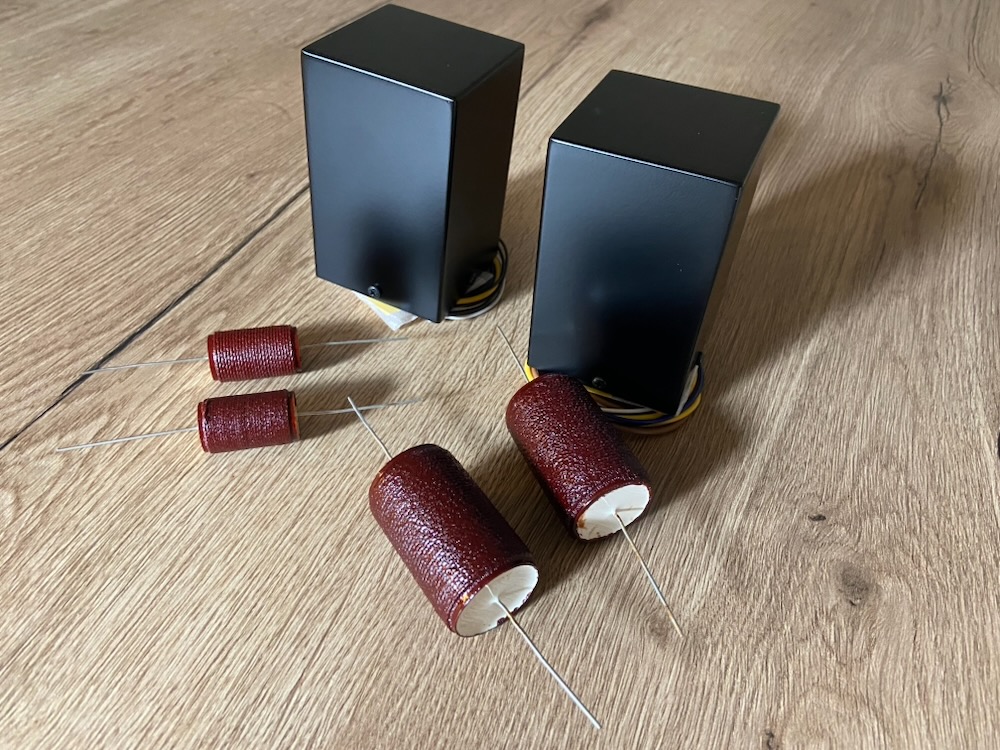
Finally there!
So the new build could start, finally.
This time I copied a schematic alike another phono stage I use, only using Western Electric coupling
capacitors. It has 6SL7 and 6SN7 in the design, very comfortable to build with. Power supply is
is separate, so exactly the same. And since I -can- not build twice the same, I chose for
5691 for 6SL7 and decided to let both channels go through each tube, so no (matched) pairs needed. Channel
separation from a cartridge is no way better than two triodes in one tube..
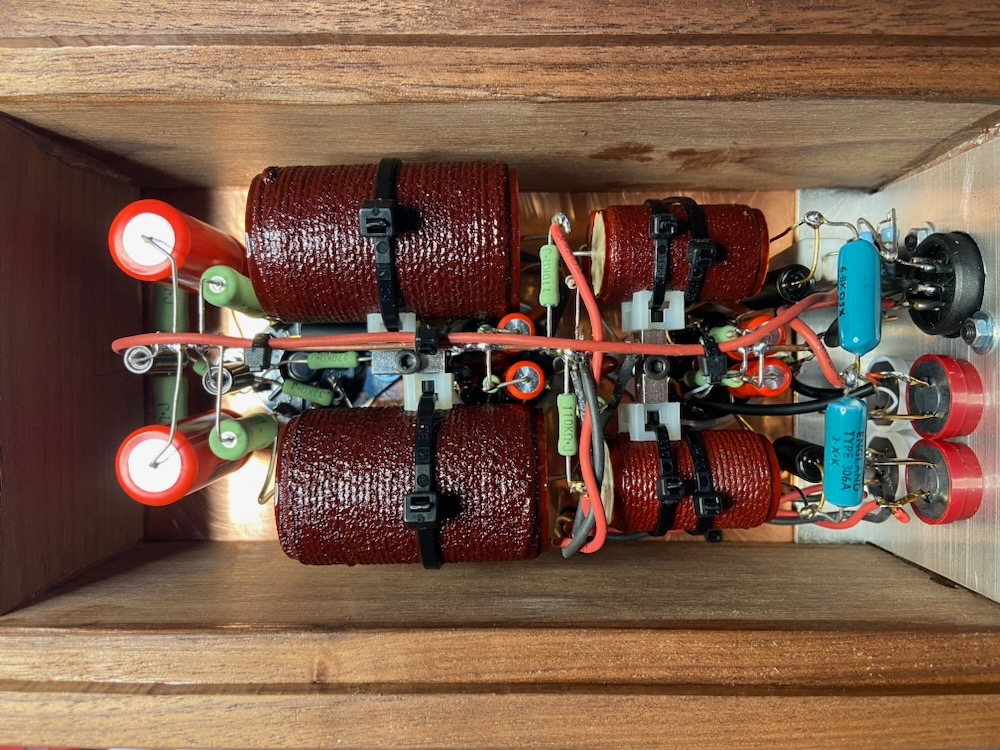
Yes, all Urushi coupling capacitors..
On average the same brand in components are used, Jupiter Cosmos in the supply, Kiwame resistors and
silver mica in the riaa-correction. Anyway, it is not about performance but about tone and imaging.
Since I know my set really well, not that difficult to focus on despite the differences.
Sound of Urushi capacitors.
Using this design it was very interesting to hear the tone and timbre of all sorts of instruments,
and voices as well. The caps are as quiet as Duelund but are a bit more lively and have more pulse
and energy on average. More focus is on each and every sound, mostly in mid and highs where lows seems
to remain just about the same. Also on voices is the same effect noticed. Voices are more compact and
have more focus, energy, are more 'there' compared to the Duelund. Don't get me wrong, the Duelund is
very good as well, but is less lively, more modest. It is just that these Urushi caps highlight
aspects in music that can be heard in concerts as well.
Upon asking for Urushi finish on transformers, as sometimes advertised, the answer was that
mister Teramoto has retired, so sadly no Urushi finish on transformers is available anymore..
How about a bit of DIY?
Of course friends come over and listen as well. And than the question arises about the effect of
Urushi lacquer on other components, maybe power supply capacitors? Urushi is not cheap, but
is available, in tube or as oil as well. But it is toxic when not dry and needs to be applied in
several layers. On top of that, it only dries at higher temperature and humidity. So no quick job in
the livingroom.
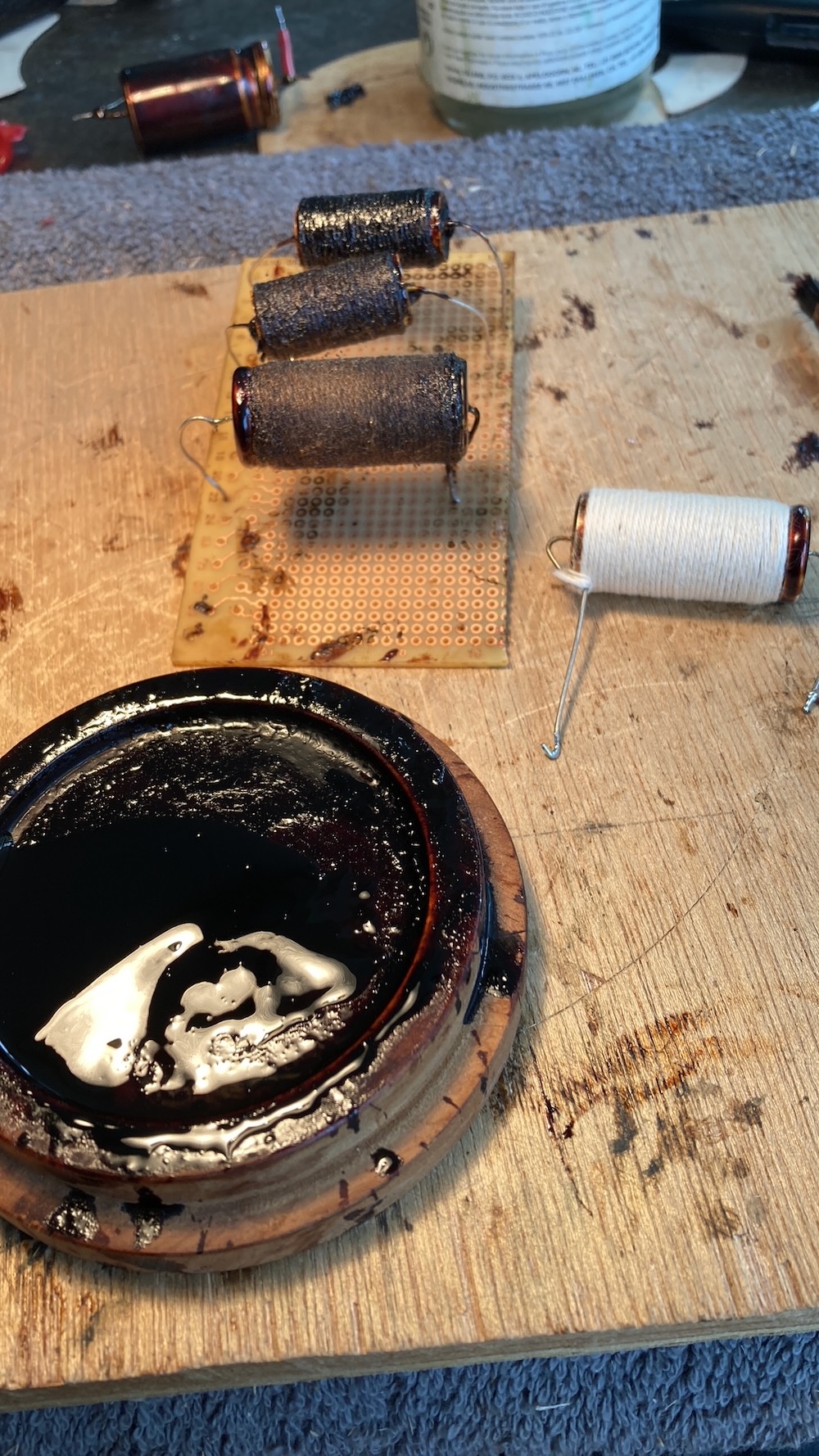
With some inventive thinking from my friend, a cardboard box was set up with a humidifier for terrarium and a
halogen lamp on top for temperature. Voilá! Then we need to dilute the Urushi and apply
it. That is kind of difficult as it is strange stuff and you need to be patient, and cautious. Not too much,
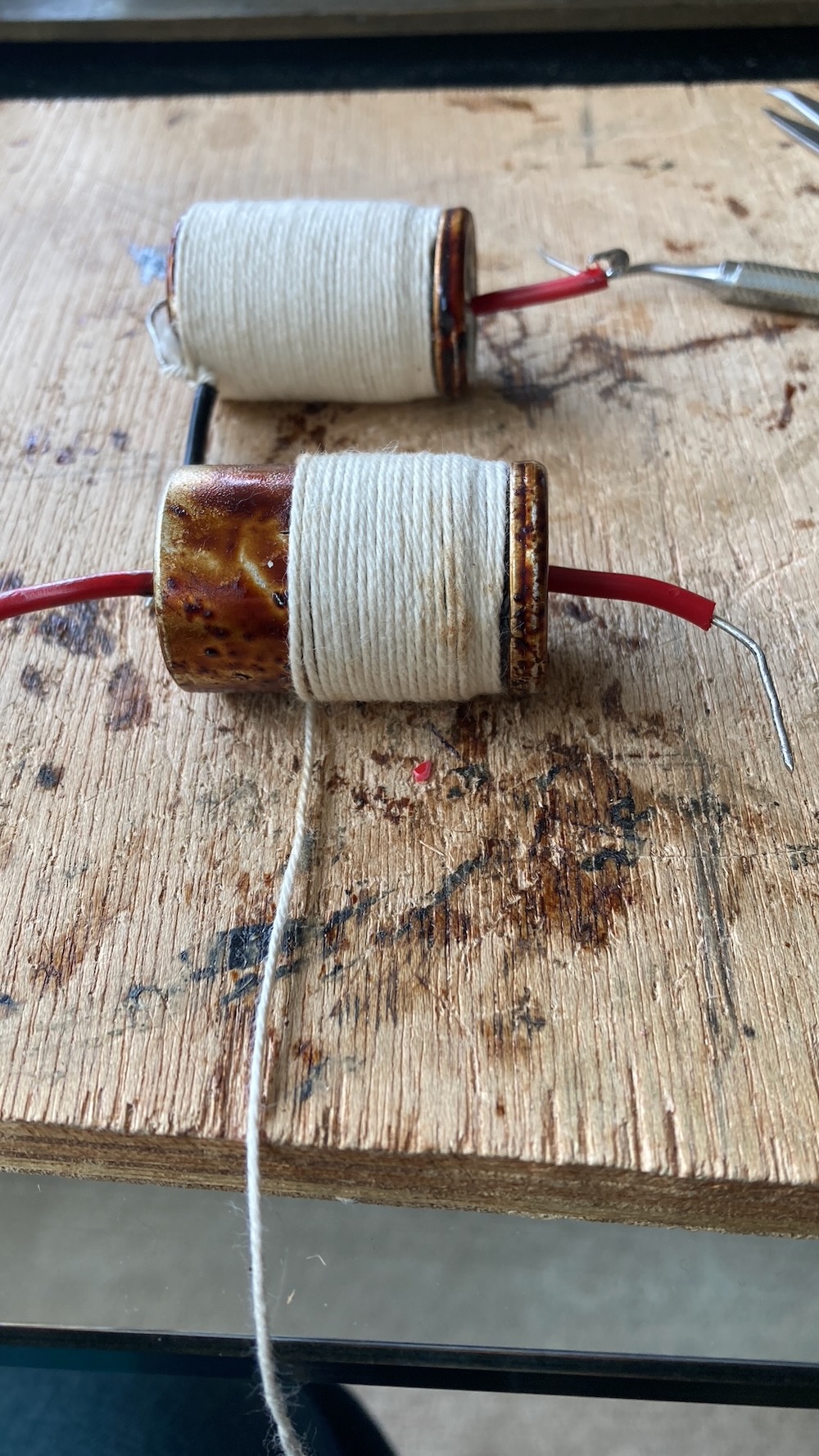
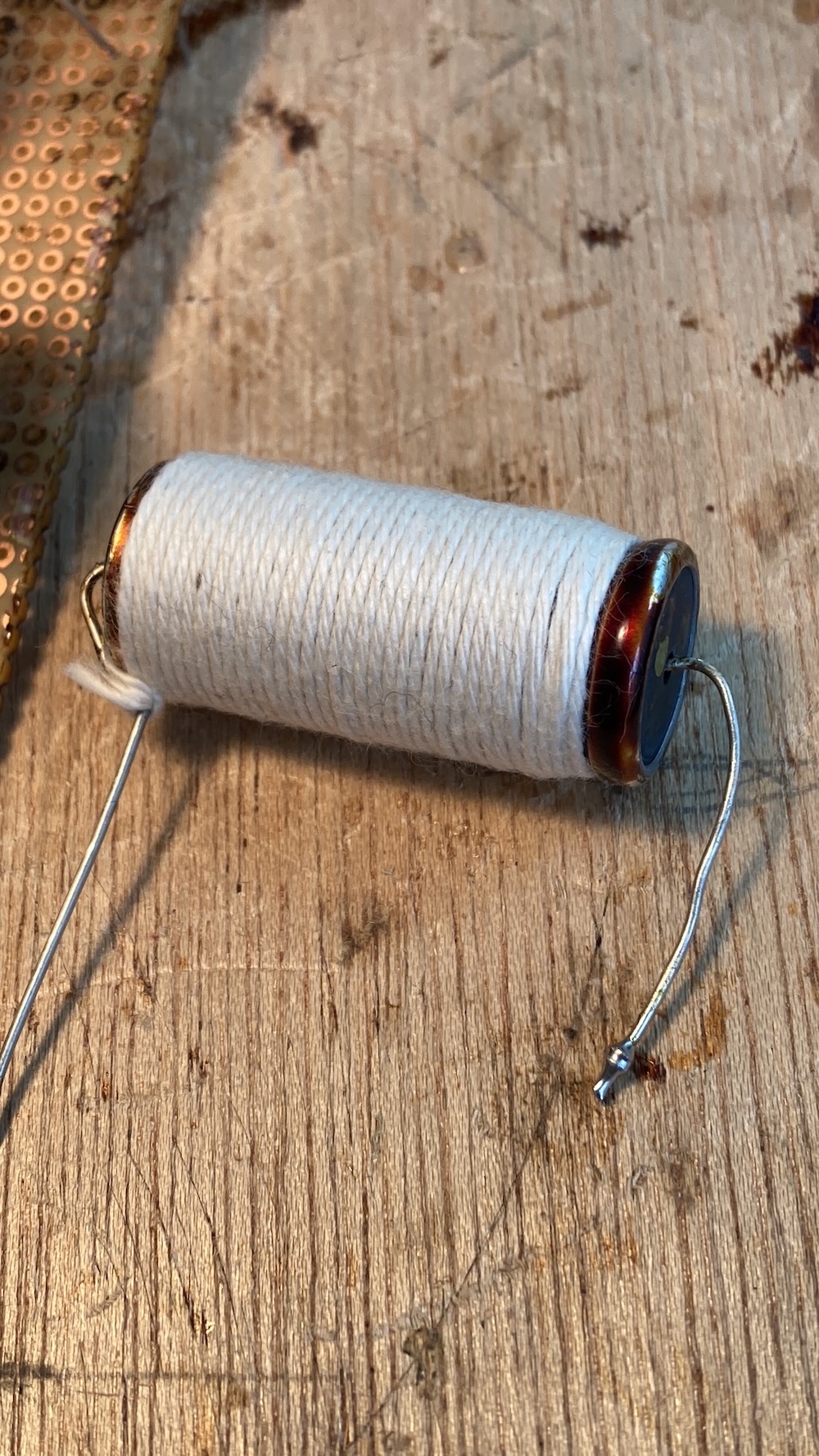
more layers, not too thick. Luckily it is not about the prettiest look. First the plastic wrap is
removed, than several layers Urushi are applied to the metal can before wrapping it with cotton.
Than the cotton can be lacquered too. Quite the job. Respect for all these craftsman who can paint
high quality in gloss and even colour!
Anyway, you can see the results below in the pictures. As said, not the prettiest, but result.
And, to give an idea what the experimental set-up looks like, a small movie..
And this is the set-up, having fun already!
How about sound?
Huge! Sound effect is even better noticeable compared to the coupling caps. As the electrolytic
capacitor have an aluminum body that is sealed, and the only damping inside are the foils, the
extra damping on the outside has maximum effect. No news here,
did this many, many years ago which got me the nickname of cap-skinner. The effect of cotton
drained Urushi on the aluminum can is worth the effort! It brings sheer musicality and tonality
I have never experienced in an electrolytic nor any other power supply capacitor that I tried. The effect
is about the same as described above for the coupling capacitor, only multiplied.
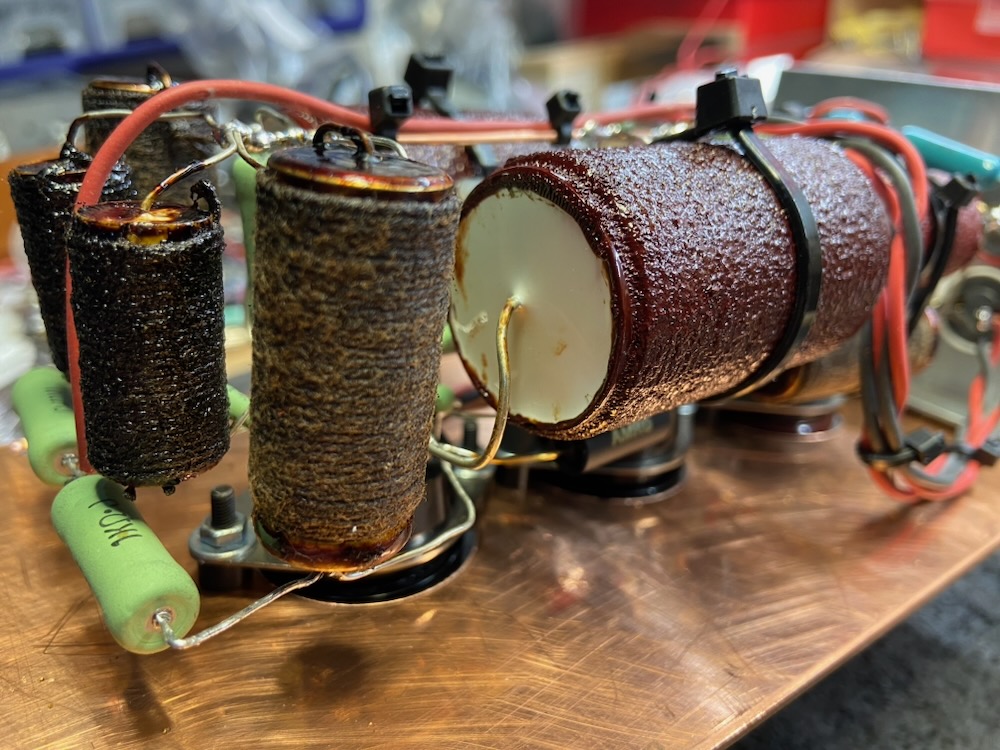
Coupling-, riaa- and power supply capacitors all Urushi-fied..
What next? Transformers? Speaker cones? Urushi oil on chassis? - Who knows..
Worth the effort?
Well.. I would say Yes. If you are comfortable with investing in a humidifier and maybe a more
representable box, have no problem working with toxic sap from a tree and have the patience to apply
several layers..
If you don't, just buy these at Audio Feast!